


Driveway & Decorative Concrete Resurfacing Sydney: 2026 Trends
A tired driveway has a way of making the whole front of the house look older. Oil stains that never fully lift, hairline cracks that keep spreading, and patchy colour from years of sun can make even a well-kept home feel a bit rough around the edges. Full replacement can fix it, but it’s often pricey, noisy, and messy.
That’s why Decorative Concrete & Resurfacing Sydney is getting so much attention right now. Resurfacing is a new decorative layer applied over existing concrete (after proper prep and repairs). You keep the slab but refresh the look, grip, and protection. In this guide, you’ll see the 2026 design trends Sydney homeowners are choosing, practical finish options for driveways and outdoor areas, and how to pick a surface that handles local weather, sun, and day-to-day wear.
2026 resurfacing trends: Sydney homeowners are choosing for driveways and outdoor areas.
Natural stone looks without the stone price tag
Sydney homes are leaning into finishes that look like real stone, without the cost and fuss of quarry stone or thick pavers. Think limestone, sandstone, travertine, and slate-inspired textures, all created with coloured coatings, patterned rolls, and stencils that add believable movement and depth.
These looks suit all sorts of properties. A sandstone-style path works well with Federation and bungalow homes in the Inner West. A cooler grey slate effect can suit new builds with dark roofs and simple gardens. Travertine-style tones are popular around pools, where people want a resort feel without a slippery shine.
A few practical checks matter more than the pattern:
- Slip resistance: Any area that gets wet (steps, pool surrounds, sloped driveways) should use a texture and sealer choice that doesn’t turn glossy.
- Sealing: A good sealer helps with tyre marks, leaf stains, and spills, especially under cars.
- Stain resistance: If you park over the same spot daily, ask how the system handles oil and hot tyre pickup and what cleaning products are safe.
Warmer neutrals, soft greys, and low-contrast patterns
Bright, harsh whites are fading out. So are busy, high-contrast patterns that shout for attention. In 2026, the popular look is calmer: warmer neutrals (sand, biscuit, and light taupe), soft greys, and low-contrast mottling that looks natural from the street.
This shift fits Sydney’s mix of materials. Warm neutrals pair nicely with red and brown brick, timber fences, and sandstone edging. Soft greys suit modern cladding, charcoal roofs, and black window frames without making the entry feel cold.
There’s also a practical win. Low-contrast designs hide the stuff you can’t avoid: dust from a dry week, small tyre marks, and tiny repairs that would stand out on a flat, single-tone finish.
A simple matching tip: pick your driveway colour to sit between the roof and the garage door, not lighter than both. It tends to look more “built-in” and less like an afterthought.
Safety and comfort upgrades: more grip, less glare, cooler underfoot
Sydney weather is hard on outdoor surfaces. Summer heat bakes the slab, storms hit fast, and many driveways have a slope that turns into a skate ramp when it’s wet. That’s why safety upgrades are a big part of the 2026 trend list.
Textured resurfacing is being chosen for grip first, looks second. Light texture can be enough for flat paths. For steep driveways, exposed-style textures or anti-slip additives (mixed into the coating or sealer) help tyres and shoes hold on when the rain hits.
Heat is the other issue, especially in western suburbs where full sun can make concrete uncomfortable to walk on. Lighter colors often feel cooler than dark greys and charcoals, and some coating systems are designed to reduce heat build-up compared with plain, dark concrete. It won’t turn your driveway into a cool tile floor, but it can make a noticeable difference on a hot day.
Pick the right resurfacing finish for your driveway, budget, and Sydney conditions.
Choosing a finish is a bit like choosing flooring. It has to look right, but it also has to cope with how you live. Parking, foot traffic, dogs, scooters, shade, and salt air all change what will last.
Cost can vary a lot for driveway resurfacing Sydney projects, and it’s not just about the product. Prep, repairs, access, and sealing usually make the biggest difference to the final number.
Spray-on concrete resurfacing, exposed aggregate overlays, and stencilled patterns
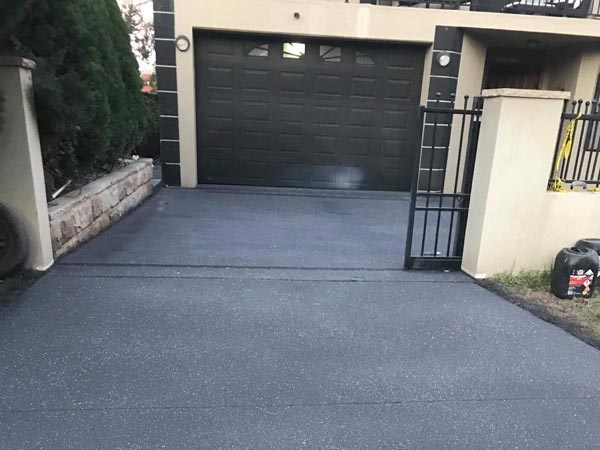
Spray-on resurfacing (often called spray texture) is a common option for larger areas. It’s applied in layers, then sealed. The big advantage is choice: lots of colors, quick coverage, and a consistent look that can lift a wide driveway fast. It suits standard suburban driveways, shared paths, and courtyards where you want a clean, even finish.
Exposed aggregate overlays give a more premium feel and a stronger texture underfoot. They’re a good fit for sloped driveways, coastal homes that track in sand, and places where you want a surface that hides everyday marks. The texture also helps with grip, but it can be a bit rougher on bare feet, so think about where people walk.
Stencilled patterns are ideal for feature areas. You can mimic pavers, tiles, or stone shapes, which works well for front entries, garden paths, and patio zones where you want detail without laying individual pavers.
Maintenance is fairly simple across most systems: sweep often, hose off grime, clean spills early, and reseal when the surface starts to look dry or loses its water beading. Ask what the contractor recommends for your exact site, because sun and traffic change the reseal timing.
What to check before you book: cracks, drainage, and curing time
The top coat is only as good as what’s underneath. Before booking, check the concrete like you’re buying a second-hand car; look for the issues that cost more later.
Hairline cracks are common and often repairable. Wider cracks, sections that move, or edges that are lifting can point to slab movement, poor base support, or tree roots. Those problems don’t vanish under a new finish.
Drainage matters too. If water ponds near the garage or sits in low spots, resurfacing should include a plan to fix levels where possible. If the surface stays wet, it can stain faster and become slippery.
Timing is another reality check. Many jobs follow a simple rhythm: prep and repairs, coating or overlay application, then curing time before regular use. Walking may be finer earlier than driving, but don’t guess. Get clear guidance in writing, especially if you need access for work or school runs.
DIY kits can suit small, low-risk areas, but driveways are harder. Uneven prep, missed contamination (like oil), or patchy thickness can lead to peeling. If you’re resurfacing where cars turn and brake, proper prep is usually the difference between “looks good” and “still looks good in a few years”.
How to get a long-lasting result from a resurfacing contractor in Sydney
A good contractor won’t just talk colour charts. They’ll talk prep, repairs, and how the finish will behave in your specific spot, full sun, leaf litter, coastal air, or a steep grade.
Decorative concrete & resurfacing Sydney work should come with a clear scope, not vague promises. You’re paying for the system and the process, not just the final colour.
Questions to ask and red flags to avoid
Use these questions as a simple script:
- How will you prep the surface? (grinding, cleaning method, and how contamination is removed)
- What repairs are included? (cracks, spalling, edges, and any level fixes)
- How many coats or layers will you apply?
- What sealer will you use, and why? (finish level, UV stability, and maintenance needs)
- What slip resistance options do you recommend for my slope and entry points?
- What’s the cure time for walking and for driving?
- What care products should I use, and what should I avoid?
- What warranty is provided, and what voids it?
Red flags are simple too: no site inspection, a quote with missing prep details, pressure to pick the cheapest sealer, or brushing off drainage concerns. If they won’t put the process in writing, it’s hard to hold the finish to account later.
In 2026, resurfacing trends in Sydney are less about loud patterns and more about surfaces that look natural, feel safer, and stay comfortable in the heat. Stone-like finishes, softer neutrals, and practical textures can lift street appeal without the cost and disruption of replacement.
Start by choosing the look you want, then match the finish to your slope, sun, and traffic. The smartest next step is an on-site assessment and a written quote that spells out prep, repairs, sealing, and curing times, so you know exactly what you’re getting before the first grind starts.