
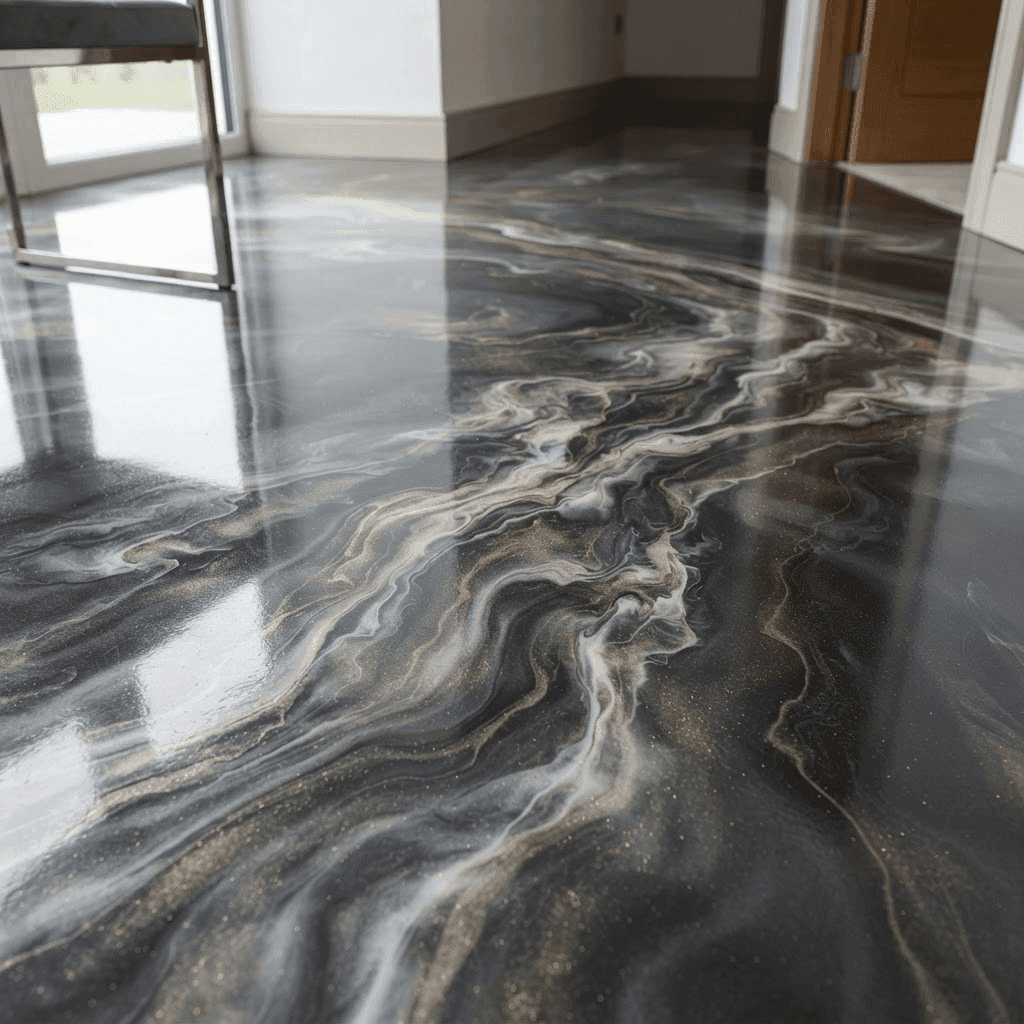
Marble-inspired
Layered movement designed to create the visual character of polished stone.
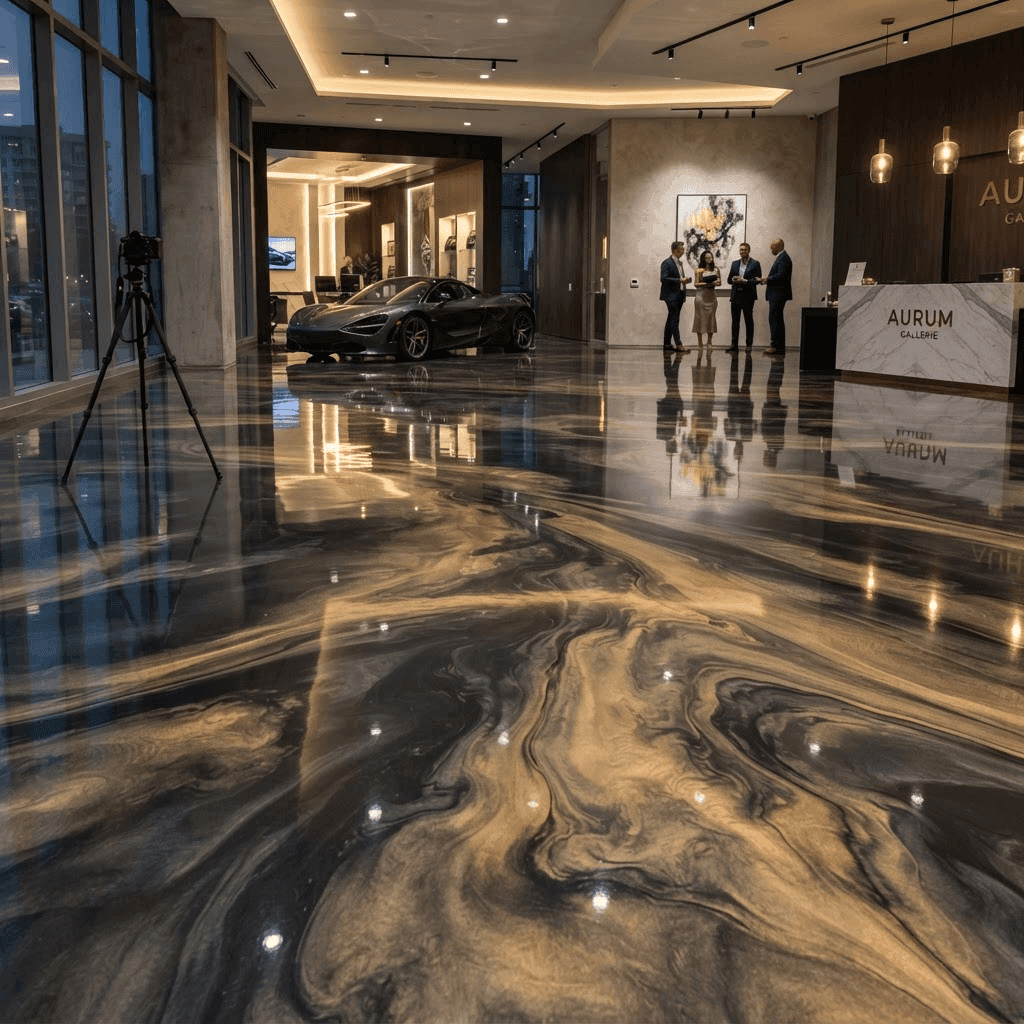
Premium decorative resin flooring with flowing metallic, marble-inspired and smoky effects for showrooms, studios, salons and selected interior spaces across Sydney.
Introduction
Metallic epoxy is different from a standard plain or decorative flake coating because the visual movement is created inside the resin itself. Metallic pigments are worked through the wet material to create depth, colour transitions and flowing patterns that can resemble marble, smoke, polished metal or abstract stone.
The finished appearance is important, but the floor still depends on what is underneath it. Cracks, old coatings, contamination, moisture and weak concrete can all affect the result, so DaniCrete begins with the condition of the substrate before discussing colour combinations or decorative effects.
Surface condition first
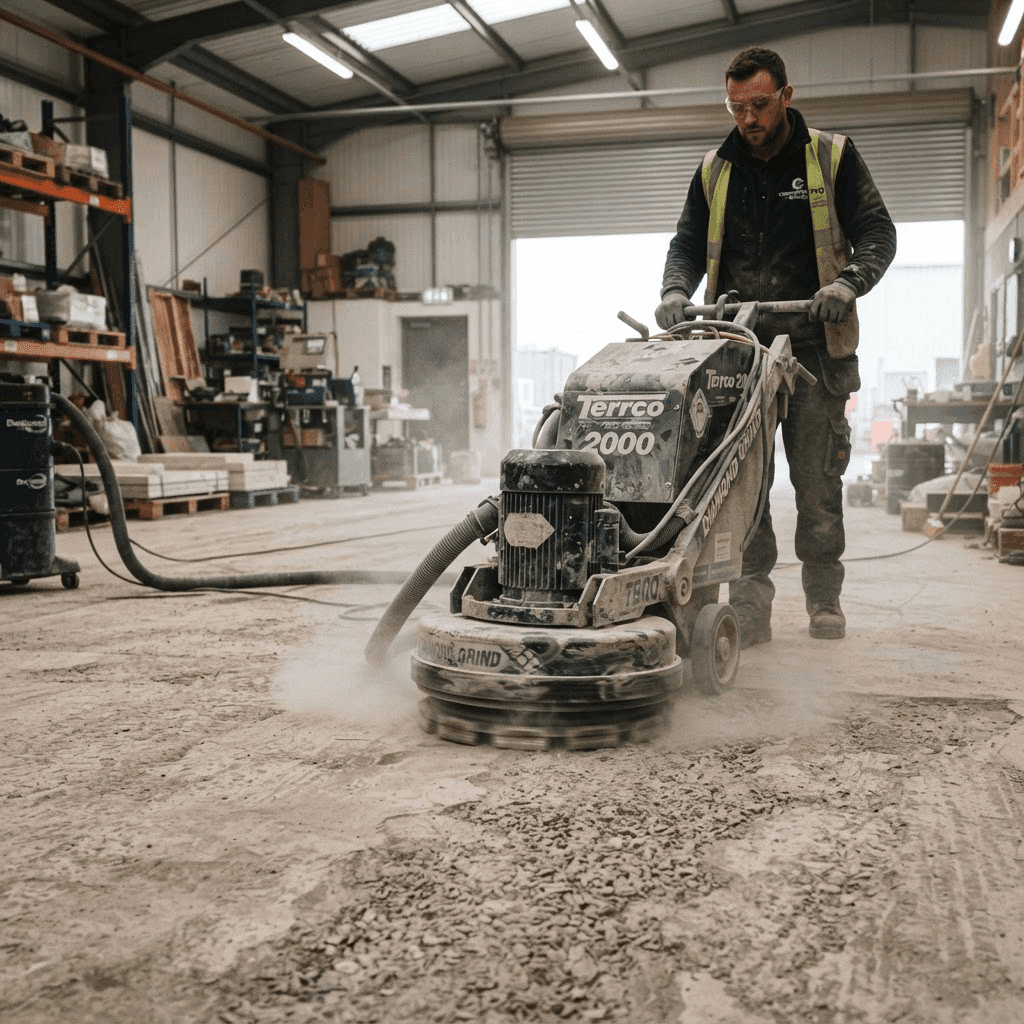
Before installation, the existing surface is assessed so defects are not simply hidden under a glossy new coating.
The visual character
Unlike a printed pattern, metallic epoxy develops through the flow of pigments in the resin. This means every finished floor has natural variation. Samples are useful for choosing colour direction and style, but the completed floor should not be expected to duplicate another floor line for line.
That variation is one of the main reasons metallic systems are chosen for feature interiors: the floor becomes a unique part of the visual design rather than only a background surface.
Decorative directions
Colour selection and application technique are planned around the interior rather than using one identical effect for every project.
Layered movement designed to create the visual character of polished stone.
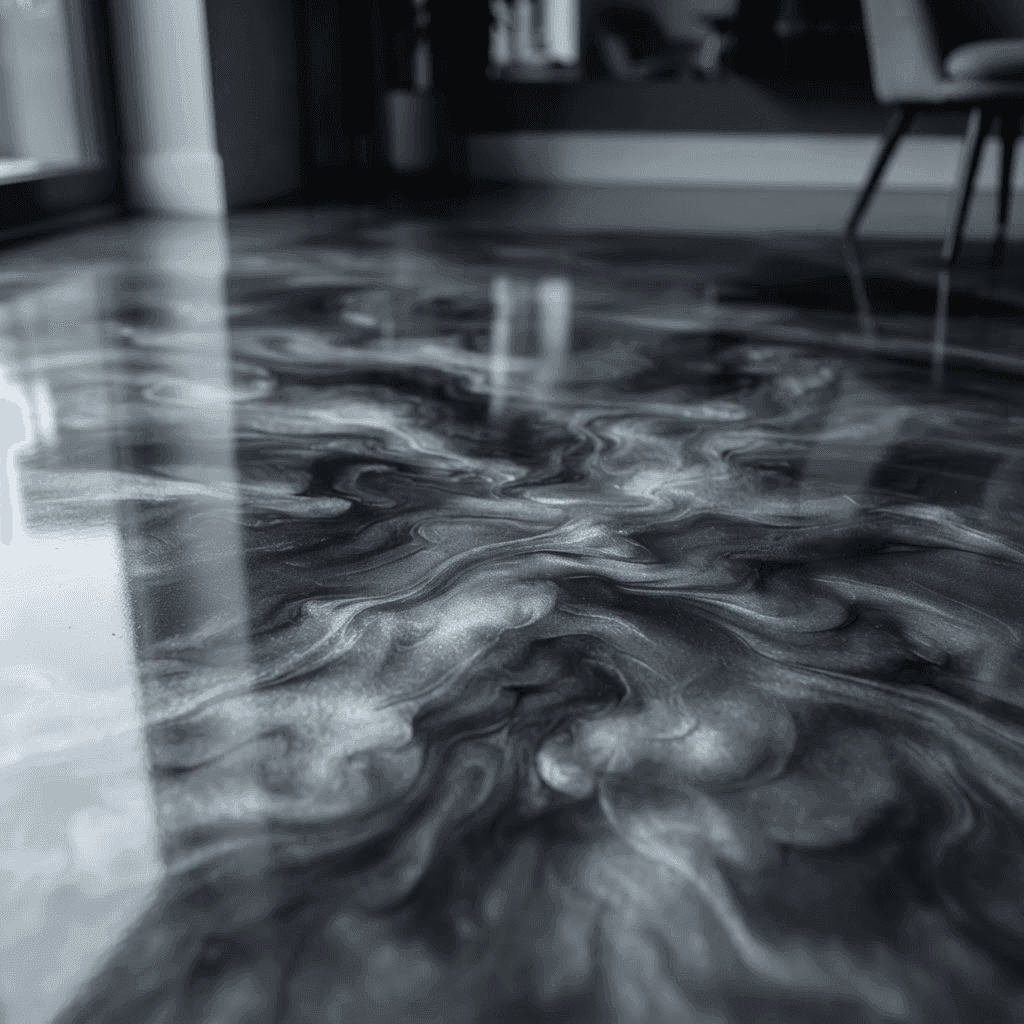
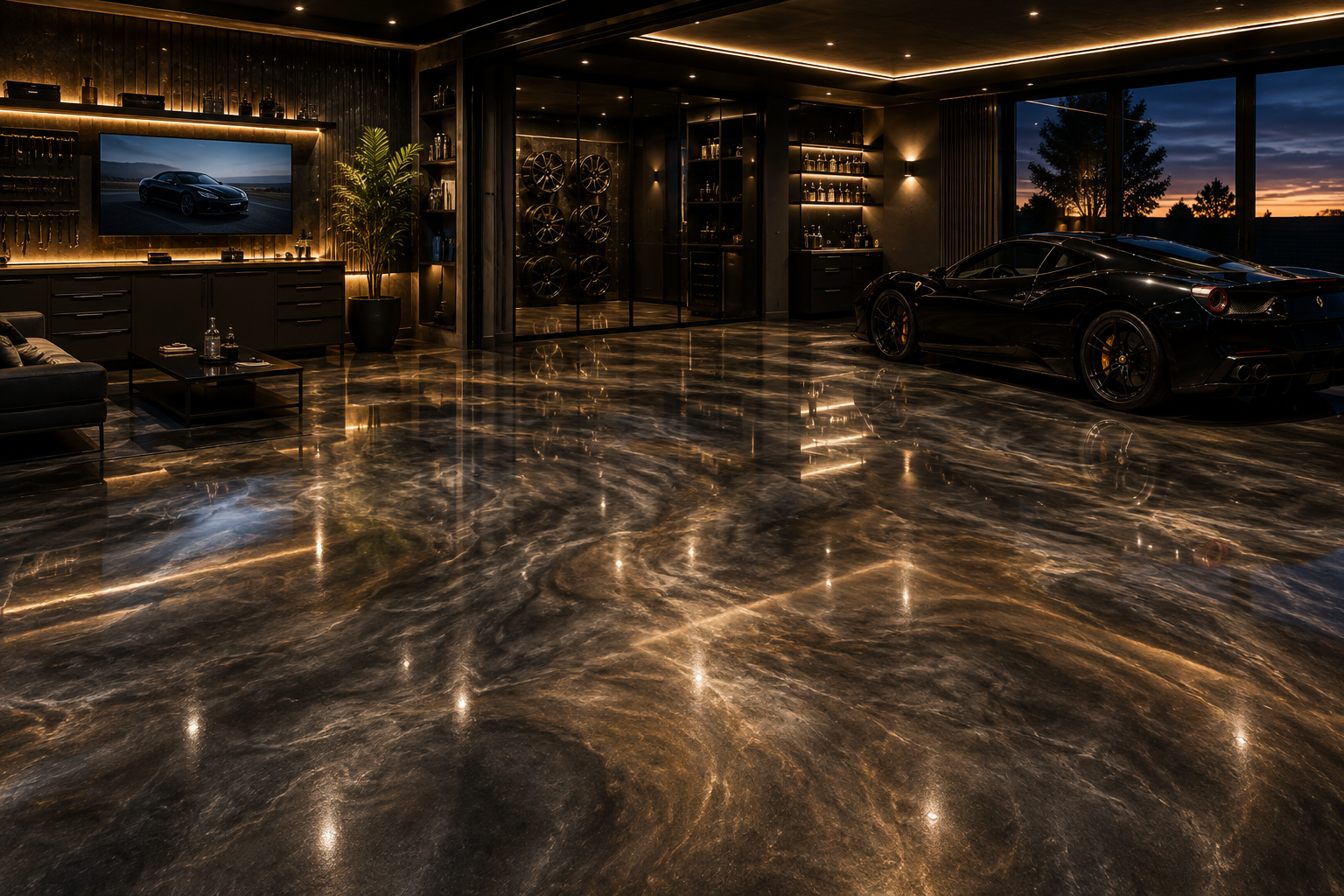
Soft colour transitions and cloud-like movement for a darker contemporary finish.
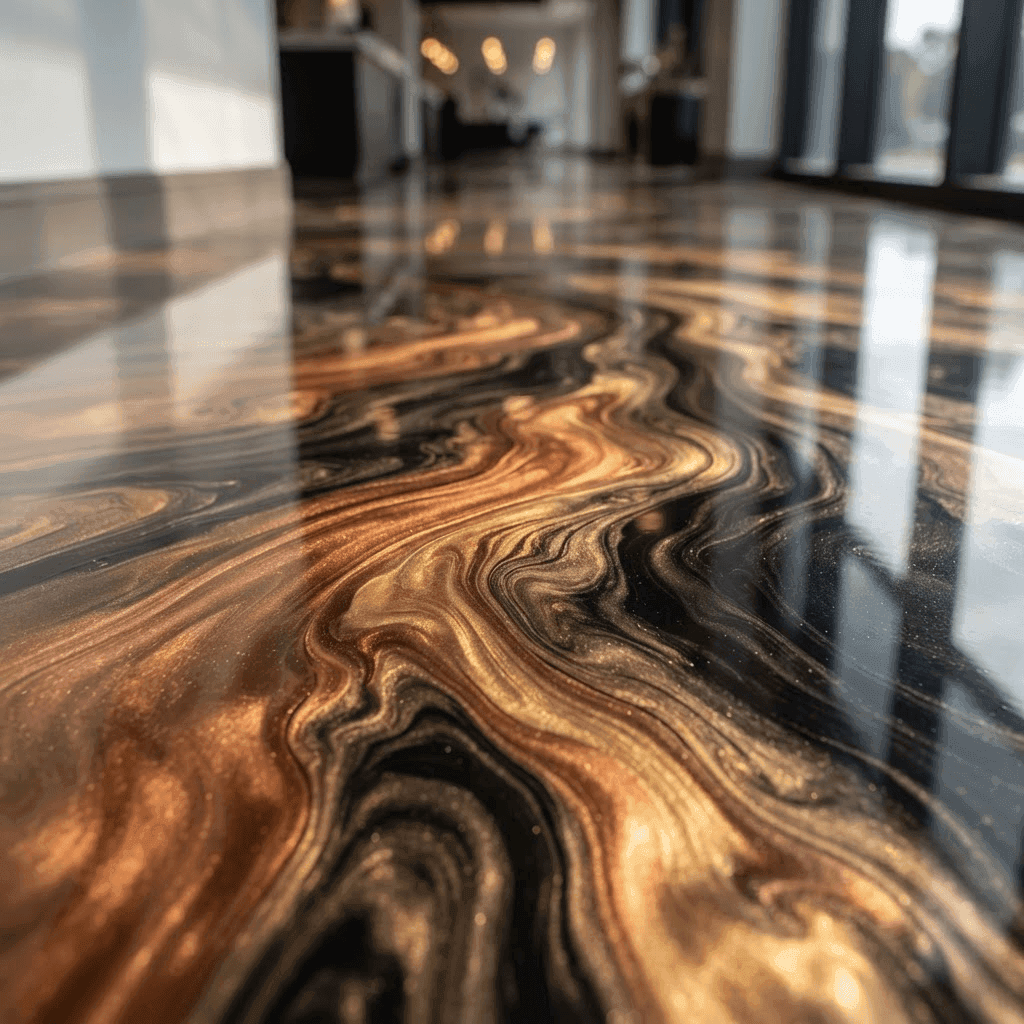
Visible movement between tones for a more artistic and high-impact floor.
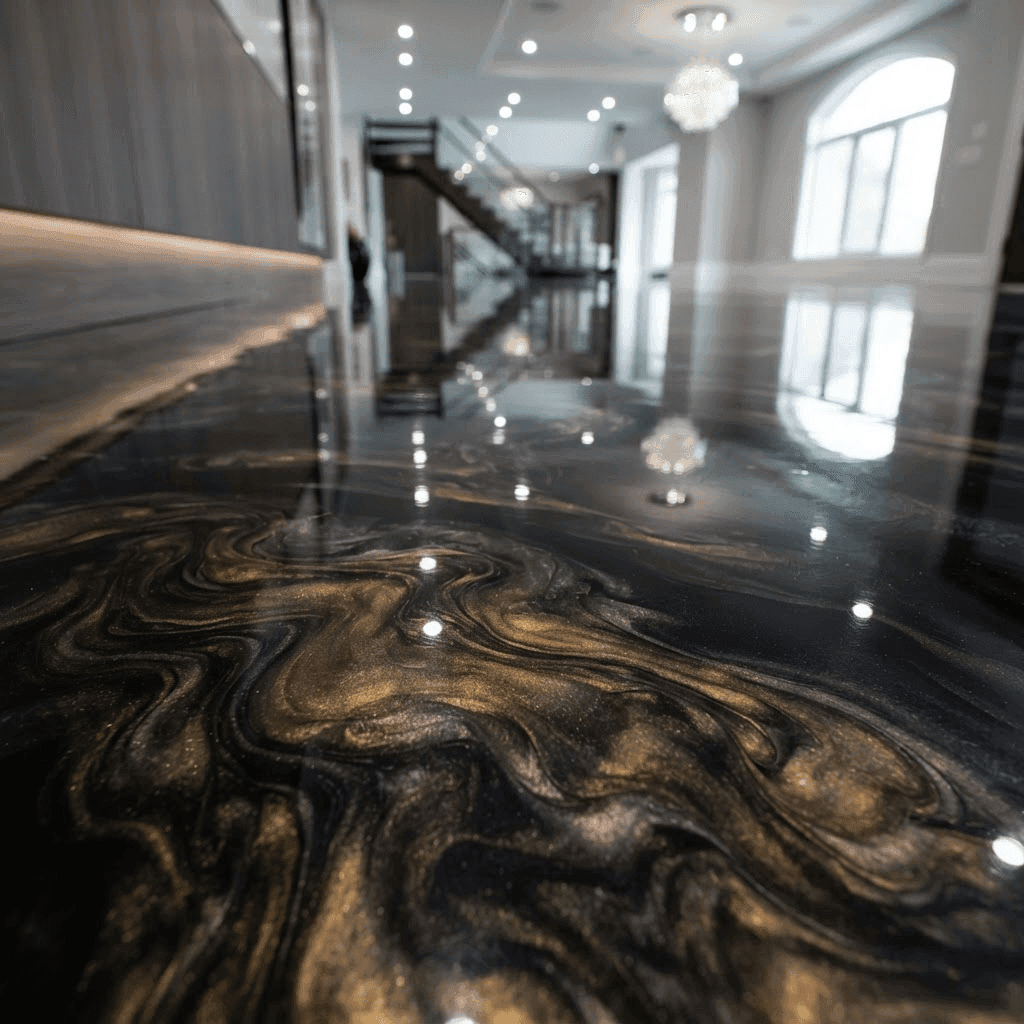
A reflective decorative appearance for selected showrooms and premium interiors.
Installation process
Decorative work happens after the substrate has been properly prepared and the base system established.
The substrate is checked for previous coatings, cracks, contamination, moisture concerns and areas that may need repair.
The floor is mechanically prepared to create a sound, clean base suited to the decorative resin system.
The selected primer and base layers are installed to create the foundation for the metallic effect.
Pigments are placed and worked through the resin to create the selected flowing, smoky or marble-inspired visual direction.
The completed decorative layer is protected with the selected finish and allowed to cure for the required period before the space returns to use.
Suitable spaces
Showrooms
Studios
Beauty salons
Reception areas
Boutiques and selected retail
Premium residential interiors
Selected offices
Entertainment and feature rooms
Exhibition spaces
A highly decorative metallic floor is not automatically the right system for every garage, wet work area, exterior space or heavy industrial environment. Slip resistance, UV exposure, chemicals, abrasion, cleaning methods and the type of traffic all need to be considered. In some spaces a flake, plain or industrial resin system may be more practical.
Frequently asked questions
Metallic epoxy is a decorative resin flooring system that uses metallic pigments within the coating to create movement, depth and marble-like or smoky effects. The final appearance is influenced by pigment choice, application technique and how the material flows while curing.
No. Metallic floors are created through flowing pigments and application technique, so natural variation is part of the finish. Samples help guide colour and style, but the completed floor will have its own movement and pattern rather than reproducing a printed design exactly.
It is most often chosen where the floor is intended to be a visual feature, such as showrooms, studios, salons, reception areas, boutiques, selected offices and premium residential interiors. Suitability still depends on the substrate and how the space is used.
Professional surface preparation is normally required. The existing floor is assessed for previous coatings, cracks, contamination, moisture signs and weak material before the substrate is prepared for the selected resin system.
Sometimes, but only after the existing surface has been assessed. The new system must bond to a stable substrate, so loose or incompatible coatings and unsuitable surfaces may need to be removed or mechanically prepared before installation.
Slip resistance depends on the final surface texture and the environment. A very smooth high-gloss decorative floor can feel different from a textured flake floor, so the intended use, cleaning, wet conditions and slip requirements should be discussed before the system is selected.
Metallic epoxy is primarily used as a decorative interior finish. Direct UV exposure, weather, moisture and slip risk can affect suitability outdoors, so exposed external areas need a separate assessment and should not automatically use the same system as an interior feature floor.
Metallic epoxy specialists
Send photos of the existing floor, the approximate area and the style you want to create. DaniCrete can discuss substrate preparation, colour direction and whether metallic epoxy is suitable for the space.